
The Hidden Cost of Cheap Internet

The Hidden Cost of Cheap Internet

The Hidden Cost of Cheap Internet

Why South African Businesses Are Switching to Managed Connectivity

Most business owners can tell you exactly what they pay for their internet line every month. Far fewer can tell you what that line is actually worth — or what it costs them when it stops working.

That gap is where the trouble starts.

Across South Africa in 2026, we are seeing a steady migration of small and mid-sized businesses away from the cheapest fibre or LTE contract they could find, and toward something that looks, on paper, more expensive: managed connectivity. The reason is straightforward. They have done the maths on what an outage actually costs them and found that the cheap line was never really cheap.

Here is what is hidden inside that low monthly price.

1. Contention Ratios — The Asterisk Nobody Reads

Consumer-grade fibre packages are sold at the advertised speed. What is rarely advertised is the contention ratio — the number of customers sharing the same upstream pipe. A 1:50 contention ratio means up to 50 households or businesses are competing for the same bandwidth at peak times. Your ‘100Mbps’ line might deliver that at 03:00 and 22Mbps at 14:00, when it actually matters.

Business-grade lines run on far lower contention ratios — often 1:1 (dedicated) or 1:5. The price difference reflects a real engineering difference, not a brand premium.

2. The SLA That Is Not There

Read the contract. Most consumer-grade and entry-level business packages have no service level agreement at all — or one with response times measured in business days, not hours. When the line drops on a Friday afternoon, ‘best-effort’ support means you might have connectivity again by Tuesday.

A managed connectivity contract sets specific, contractual targets for uptime, mean time to respond, and mean time to resolve. If the provider misses, there are credits or escalation paths. The line is no longer a maybe — it is a commitment.

3. No Failover, No Plan B

A single internet line is a single point of failure. When fibre is cut by a contractor down the road — and it will be, sooner or later — a business with one line is offline until someone repairs the cable. That is hours at best, days at worst.

Managed connectivity assumes failure as part of the design. Fibre paired with LTE backup, automatic failover at the router, and, where appropriate, COMSOL licensed wireless as a third path. The line going down stops being a crisis and becomes an event nobody noticed.

4. The Support Queue Tax

When something does go wrong on a low-cost line, you join the same support queue as every consumer in your suburb. You explain the same thing to three different agents. You wait for a callback that does not come. You eventually get a technician scheduled three working days from now.

Managed connectivity routes you through a different door — usually direct to a technical contact at the provider, often with a single dedicated account manager who knows your setup. The faster resolution is not magic; it is structural.

5. The Compliance Layer Most Businesses Ignore

Under POPIA, your business is responsible for the data flowing across your network. Cheap connectivity contracts rarely include any built-in security — no firewall, no managed Wi-Fi separation between staff and guests, no logging, no policy enforcement.

Managed connectivity, properly designed, includes those layers from day one. Next-generation firewalls, secure hotspots for staff and guests, and the audit trail required when (not if) the Information Regulator comes knocking.

What Managed Connectivity Actually Costs

This is the part most business owners want to skip to. The honest answer: managed connectivity from a partner like Leaf Technologies typically lands within 10–25% above the cheapest comparable contract — sometimes less, when the existing contract is paying for unused capacity.

In return, you get a line designed for business use, an SLA you can hold someone to, failover that actually fails over, support routed through a partner who knows you by name, and a security posture that does not embarrass you under audit.

The maths usually works out the moment you cost a single avoided day of downtime.

How to Audit Your Current Connectivity

If you are not sure where you stand, the questions to put to your current provider are simple:

  • What is the contention ratio on this line?
  • What is the contractual SLA — uptime percentage, mean time to respond, mean time to resolve?
  • If this line goes down, what is my failover path? Who switches it over?
  • Who is my named account manager, and how do I reach them outside the support queue?
  • What security is included on this connection by default?

If the answers are vague, missing, or come with a long pause, you have your answer.

The Leaf Approach

Leaf Technologies designs connectivity solutions across nine South African branches, partnering with the country’s leading ISPs to build the right combination for your business — fibre, LTE, COMSOL licensed wireless, secure hotspots, and managed firewalls, all on one bill, with one account manager and one number to call.

We do not sell the cheapest line. We build the right one. Then we keep it running.

Want a no-obligation audit of your current connectivity contract? Send your latest invoice to sales@leaftechnologies.co.za, and we will benchmark it against what your business should actually be paying — and getting.

Security Tips 2026: Keep Your Privacy Settings On | Leaf Technologies

Security Tips 2026: Keep Your Privacy Settings On | Leaf Technologies

Every time you browse a website, download an app, or sign up for a new service, you leave a digital trail. This trail is made up of your browsing habits, location data, personal preferences, contacts, and even your real-time activity. Without actively managing your privacy settings, this information can be harvested, shared, sold, and in some cases, exploited by malicious actors.

At Leaf Technologies, we work with businesses and individuals across South Africa to strengthen their cybersecurity posture. One of the most consistent — and preventable — vulnerabilities we encounter is this: people leave their privacy settings at factory defaults. Default settings are almost always configured to collect the maximum amount of data, not to protect you.

Your digital privacy does not protect itself. Keeping your privacy settings on means you decide what information you share, with whom, and for what purpose. That control is invaluable.

South Africa’s Protection of Personal Information Act (POPIA) gives you the right to privacy and control over your personal data. However, exercising that right requires you to actively manage your privacy settings — the law alone cannot protect you if you leave your data exposed.


Table of Contents

  1. Why Privacy Settings Matter More Than Ever
  2. What Apps & Websites Collect Without You Knowing
  3. Privacy Settings Guide by Platform
  4. Securing Privacy on Mobile Devices
  5. Social Media Privacy: Lock It Down
  6. Browser Privacy: Your Online Footprint
  7. Advanced Privacy Tips from Leaf Technologies
  8. Common Privacy Mistakes to Avoid
  9. Conclusion: Privacy Is an Active Choice

Why Privacy Settings Matter More Than Ever

The digital landscape has changed dramatically. Every app, website, and connected device is a potential data collection point. According to recent research, 91% of people feel they have lost control of their personal data — and it’s not hard to see why. In 2024 alone, the largest known data breach exposed 2.9 billion records, and the average cost of a data breach in South Africa reached R2.7 million.

What makes this particularly alarming is that 74% of data breaches involve the human element — and one of the most common contributing factors is misconfigured or ignored privacy settings. The risk is real, and it affects everyday users just as much as large organisations.

Privacy settings are your first and most accessible line of defence. They determine what data apps and platforms can collect, who can see your information, and how your digital footprint is managed. When left at their defaults, most platforms are configured to gather as much data as possible — not to protect you.


What Apps & Websites Collect Without You Knowing

Understanding what gets collected when your privacy settings are off — or left at default — is the first step toward taking back control. Here is what many apps and platforms routinely gather:

  • Location data — Your precise GPS coordinates, updated in real time, even when the app is running in the background.
  • Contact lists — Many apps request access to your entire address book, including details of people who never agreed to share their data.
  • Microphone and camera access — Apps with these permissions can, in some cases, record audio or video in the background.
  • Device identifiers — Your phone’s unique identifiers allow advertisers to track you across multiple apps and platforms without your knowledge.
  • Browsing history — Especially through browser extensions and ad networks, your full browsing history can be profiled and sold.
  • Behavioural patterns — How long you spend on content, what you tap, scroll past, or re-read is monitored and used to build an advertising profile.
  • Financial activity inferences — Even without direct banking access, apps can infer your income bracket and spending habits from usage patterns.
“If you’re not paying for the product, you are the product. Your data is the currency — and without privacy settings, you’re spending it without knowing.”

Privacy Settings Guide by Platform

Platform Where to Find Privacy Settings Key Action to Take
Google Account myaccount.google.com → Data & Privacy Turn off Web & App Activity and Ad Personalisation
Facebook / Meta Settings & Privacy → Privacy Checkup Limit who sees your posts; turn off Off-Facebook Activity
Instagram Settings → Privacy Set account to Private; limit activity status visibility
WhatsApp Settings → Privacy Disable read receipts; set profile photo to “My Contacts Only”
Windows 11 Settings → Privacy & Security Disable diagnostics sharing, location tracking, and ad ID
macOS / iOS System Settings → Privacy & Security Review app permissions; enable App Tracking Transparency
Android Settings → Privacy Use Permission Manager; disable ad personalisation
LinkedIn Settings → Visibility Turn off profile view sharing; control third-party data exports

Securing Privacy on Mobile Devices

Your smartphone is arguably the most data-rich device you own. It knows where you are, who you talk to, what you buy, how you exercise, and even how you sleep. Keeping your mobile privacy settings properly configured is critical.

App Permissions: The Golden Rule

Only grant an app the permissions it genuinely needs to function. A flashlight app has no legitimate need for your contacts or location. A photo editor does not need microphone access. Apply the principle of least privilege — give apps only what they absolutely need, and nothing more.

  • Regularly audit app permissions through your phone’s Privacy or Permissions Manager.
  • Revoke location access for any app that doesn’t require it to function.
  • Switch location access from “Always” to “Only while using the app” wherever possible.
  • Disable background app refresh for apps that don’t need it.
  • Turn off personalised advertising in your device settings — both iOS and Android offer this option.
  • Use the built-in privacy reports (available on iOS under Settings → Privacy & Security → App Privacy Report) to see which apps are accessing your data and how often.

Leaf Technologies Tip: On Android, go to Settings → Privacy → Permission Manager. On iPhone, go to Settings → Privacy & Security → App Privacy Report. Make it a monthly habit to review these reports — you’ll often be surprised by what you find.


Social Media Privacy: Lock It Down

Social media platforms are designed to maximise data collection. Every like, share, comment, and even how long you pause on a post is tracked and used to build a detailed profile about you. Using social media without configuring your privacy settings is one of the most common — and avoidable — risks people take online.

Facebook & Instagram

Use the Privacy Checkup tool on Facebook to walk through who can see your posts, your friend list, and your profile information. On Instagram, switching to a private account ensures only approved followers can see your content — a simple but powerful first step.

LinkedIn

Professional networking doesn’t mean leaving all your career and personal data open. In LinkedIn’s privacy settings, you can control who sees your connections, disable profile view tracking, and opt out of data sharing with third-party partners.

TikTok & Emerging Platforms

Newer platforms often have the weakest default privacy protections. Always set your account to private immediately upon creating it — before you post anything. Review what data the app requests access to, and if the permissions seem excessive, consider whether the app is worth the risk.

Warning: Oversharing on social media — especially your location, daily routine, and personal milestones — can make you a target for social engineering, phishing attacks, and even physical crime. Share only what’s necessary, and with the right audience.


Browser Privacy: Your Online Footprint

Your web browser is the window through which you see the internet — and it can also be the window through which the internet sees you. Default browser settings typically allow cookies, tracking scripts, and data collection from virtually every website you visit.

  • Use a privacy-focused browser such as Firefox, Brave, or Safari, which offer stronger built-in tracking protections than Chrome by default.
  • Enable “Do Not Track” in your browser settings (note: this relies on websites to honour the request).
  • Install a reputable ad and tracker blocker such as uBlock Origin.
  • Regularly clear your browsing history, cookies, and cached data.
  • Avoid saving passwords directly in your browser — use a dedicated password manager instead.
  • Be cautious with browser extensions: they can have extensive access to your browsing activity. Only install extensions from trusted, verified developers.
  • Use private or incognito mode on shared devices — but remember, this does not hide your activity from your ISP or employer network.
  • Consider using a reputable VPN (Virtual Private Network) when connecting on public Wi-Fi to encrypt your connection.

Advanced Privacy Tips from Leaf Technologies

Once you’ve covered the basics, these additional steps will significantly strengthen your privacy posture — particularly for businesses and high-value individuals in South Africa.

Enable Two-Factor Authentication (2FA) Everywhere

Two-factor authentication adds a second layer of verification to your accounts. Even if someone obtains your password, they cannot access your account without the second factor. Enable 2FA on every account that supports it — prioritising your email, banking, and social media accounts first.

Use Unique, Strong Passwords

Password reuse is one of the most common causes of account compromise. Use a password manager such as Bitwarden, 1Password, or NordPass to generate and securely store unique, complex passwords for every account. Never reuse passwords across different services.

Review Connected Apps Regularly

Over time, you grant many third-party apps access to your core accounts like Google, Facebook, or Apple ID. Regularly review and revoke access to apps you no longer use. Both Google and Facebook provide dedicated dashboards where you can manage all connected third-party applications.

Encrypt Your Devices

Enable full-disk encryption on all your devices. Modern smartphones encrypt by default when you set a PIN or passcode. On Windows, enable Bitlocker. On Mac, enable FileVault. This ensures that even if your device is stolen, your data cannot be easily accessed without your credentials.

Be Wary of Public Wi-Fi

Public Wi-Fi networks in shopping centres, airports, and coffee shops are prime hunting grounds for cybercriminals. Avoid accessing sensitive accounts or conducting financial transactions on public networks. If you must connect, always use a VPN to encrypt your traffic.

Leaf Technologies Pro Tip: Set a recurring calendar reminder every three months to audit your privacy settings across all major platforms. Technology and app permissions change frequently — what was adequately protected last year may not be today. A quarterly privacy review is a healthy habit for any digital citizen or business.


Common Privacy Mistakes to Avoid

  • Skipping the Terms & Conditions: Tools like tosdr.org offer quick plain-language summaries.
  • Clicking “Accept All” on cookie banners: Take a moment to decline non-essential cookies.
  • Using the same email for everything: Use a secondary email for sign-ups and competitions.
  • Ignoring operating system updates: Updates contain critical security patches.
  • Oversharing location data: Think twice before tagging your home or workplace.
  • Downloading apps from unofficial sources: Only use the Google Play Store or Apple App Store.
  • Assuming private/incognito mode means invisible: Your ISP and websites can still see your activity.

Conclusion: Privacy Is an Active Choice

Your digital privacy does not protect itself. In a world where data is currency, keeping your privacy settings on is one of the most empowering decisions you can make. It’s not about being paranoid — it’s about being informed and in control.

At Leaf Technologies, we are passionate about empowering South Africans with the knowledge and tools they need to stay safe online.

Contact Leaf Technologies Today


Published by Leaf Technologies · Cybersecurity & IT Solutions, South Africa · 24 April 2026

The Importance of CCTV in Security Systems

The Importance of CCTV in Security Systems

In an era where security concerns are escalating across various sectors, the integration of Closed-Circuit Television (CCTV) and access control systems has become imperative. These technologies not only enhance security but also streamline operations and ensure regulatory compliance. This article aims to provide a comprehensive overview of CCTV and access control systems, their benefits, challenges, and the future of these technologies, particularly in professional environments.


The Importance of CCTV in Security Systems

Overview of CCTV Technology

Closed-Circuit Television (CCTV) refers to a system of video cameras used to transmit signals to a specific place, typically for surveillance purposes. Unlike broadcast television, the signals are not openly transmitted, providing a level of security. CCTV systems can range from basic analog setups to advanced digital systems that include cloud storage and artificial intelligence for enhanced monitoring capabilities. These systems are pivotal in both crime prevention and evidence collection, making them essential for modern security strategies.

The Importance Of Cctv In Security Systems

Benefits of CCTV Surveillance

CCTV systems offer numerous advantages, including deterrence of criminal activity, increased safety for employees and customers, and improved monitoring of operations. The mere presence of cameras can discourage potential wrongdoers from engaging in illegal activities. Furthermore, in the event of incidents such as theft or vandalism, recorded footage can serve as crucial evidence for investigations and legal proceedings.

Additionally, CCTV can improve operational efficiency by allowing businesses to monitor employee productivity and compliance with safety protocols. This dual functionality—security and operational efficiency—makes CCTV systems a versatile solution for various industries.

Challenges and Limitations of CCTV

Despite their many benefits, CCTV systems are not without their challenges. Issues such as privacy concerns, data storage limitations, and the potential for misuse of footage can arise. Furthermore, older analog systems may not provide the image clarity needed for effective surveillance, leading to difficulties in identifying individuals or actions. The rapid advancement in technology also means that businesses must consistently invest in upgrades, which can become a financial burden.

Moreover, reliance on CCTV systems alone can create a false sense of security. While they are a powerful tool, they should be part of a broader security strategy that includes access control and human oversight.

Access Control Systems: A Comprehensive Overview

Types of Access Control Systems

Access control systems regulate who can enter or exit particular areas within a facility. These systems can be classified into three main types: discretionary access control (DAC), mandatory access control (MAC), and role-based access control (RBAC). DAC allows users to control access to their resources, while MAC restricts access based on system-enforced policies. RBAC assigns access permissions based on the roles of individual users within an organization, promoting efficiency and security.

Integration of Access Control with CCTV

The integration of access control systems with CCTV enhances security by providing real-time monitoring and verification of access points. This synergy allows security personnel to view live footage of entry points, assess situations as they occur, and respond more effectively to unauthorized access attempts. For instance, if an access control system triggers an alarm due to a breach, the associated CCTV camera can automatically focus on that area, giving security teams vital information for immediate response.

Advantages of a Unified Security System

Implementing a unified security system that combines CCTV and access control offers a plethora of benefits. One significant advantage is the centralization of security management. Security personnel can monitor all aspects of a facility from a single interface, leading to streamlined operations and improved response times. Additionally, unified systems can reduce costs by minimizing the need for multiple disparate systems and the associated maintenance.

Biometrics: The Future of Access Control

Biometric authentication uses unique biological traits, such as fingerprints, facial recognition, iris patterns, or voice recognition, to grant access. Fingerprint scanners are among the most common biometric systems due to their accuracy and ease of use. Facial recognition technology has gained traction in recent years, particularly in high-security environments, as it allows for contactless access.

Key Benefits of Biometrics:

  • Nearly impossible to forge or lose credentials.
  • Enhanced user convenience (no codes to remember).
  • High precision for data centers and research facilities.

Case Studies: Successful Implementations

Retail Sector: A major department store chain implemented an integrated system to reduce theft. By installing high-definition cameras at entry/exit points linked to employee access logs, the store saw a marked decrease in inventory shrinkage and increased staff confidence.

Corporate Environment: A Fortune 500 company utilized RFID cards combined with biometric authentication for sensitive areas. Integrated CCTV feeds provided real-time verification, allowing for swift response to potential threats while maintaining a smooth workflow.

The future is poised for significant advancements. The integration of Internet of Things (IoT) devices is becoming prevalent, enabling smarter, interconnected security systems. Additionally, Cloud Storage solutions are making it easier to manage large volumes of video footage, allowing organizations to access surveillance data from anywhere via mobile apps.

Artificial Intelligence (AI) is also transforming the landscape by analyzing video footage in real-time to identify unusual behavior or recognized threats without human intervention.

Conclusion

The integration of CCTV and access control systems is essential for enhancing security in today's dynamic environments. While challenges exist, the benefits of these systems—especially when enhanced by AI and biometrics—far outweigh the drawbacks. By investing in modern security solutions, organizations in South Africa can create safer environments for employees, customers, and assets alike.


FAQs

What is the primary purpose of CCTV systems?
CCTV systems are primarily used for surveillance, deterring criminal activity, monitoring operations, and providing evidence in case of incidents.

How does access control enhance security?
Access control systems limit entry to authorized personnel, thereby reducing the risk of unauthorized access to sensitive areas.

What are the challenges of using biometric systems?
Challenges include privacy concerns, implementation costs, and varying accuracy based on environmental factors like lighting or dirt.

How can organizations integrate CCTV and access control systems?
By using compatible hardware/software platforms that centralize management into a single dashboard for real-time monitoring.

Beyond the Buzzwords: Real-World Digital Transformation with Microsoft 365 and Copilot

Beyond the Buzzwords: Real-World Digital Transformation with Microsoft 365 and Copilot

How to move beyond simple software and build a connected, AI-powered ecosystem for your business with Copilot.


Is “Digital Transformation” just a buzzword in your boardroom, or is it a reality on your shop floor?

Embracing tools like can simplify the digital transformation journey.

For many South African business owners, the concept of digital transformation can feel overwhelming. It often sounds expensive, complex, and disruptive. But the reality is that true transformation doesn’t require a complete overhaul of your entire business model. Often, it starts with optimising the tools you already use every day.

At Leaf Technologies, we have observed a shift. The modern office is no longer defined by a physical desk; it is defined by a connected ecosystem.

It is time to move beyond using software simply to type letters or send emails. It is time to streamline operations and accelerate your growth with the ultimate modern office: Microsoft 365, Teams, and the AI-powered Copilot, fully managed by Leaf Technologies.

By integrating into your workflow, you can enhance productivity and streamline processes.

Digital Transformation With Office 365 And Copilot
Beyond The Buzzwords: Real-World Digital Transformation With Microsoft 365 And Copilot 3

The Foundation: Microsoft 365 as Your Digital HQ

Most businesses treat Microsoft 365 (formerly Office 365) as a utility—a way to get Word, Excel, and Outlook. However, when architected correctly, it becomes your “Digital HQ.”

In a hybrid working world, siloed communication slows down business. If your team is emailing versions of a spreadsheet back and forth, you aren’t collaborating; you are just coping.

  • Access Anywhere: Whether your sales team is on the road in KZN or your finance director is working from home, M365 ensures documents are edited and shared securely from any device.
  • The Hub for Teamwork: Microsoft Teams unifies your workforce in a single, secure shared workspace. It turns meetings into action items by integrating your calendar, tasks, and files directly into your calls.
  • Enterprise-Grade Security: With cyber threats on the rise, M365 provides built-in defence against data loss, protecting your intellectual property without hindering productivity.

The Game Changer: Microsoft Copilot

If M365 is the engine, Microsoft Copilot is the turbocharger.

There is a lot of hype surrounding Artificial Intelligence (AI), but for the practical business owner, the value lies in efficiency. is not here to replace your people; it is here to work alongside them.

Embedded directly into the apps you use daily, combines the power of large language models (LLMs) with your business data to automate the mundane:

  • Automate the Routine: Let Copilot summarise long email threads, draft proposals in Word, or analyse complex data trends in Excel instantly.
  • Intelligent Meeting Recaps: Missed a Teams meeting? Copilot generates summaries and action items, ensuring you never miss a beat without having to sit through the recording.

Why Partner with Leaf Technologies?

Migrating to the cloud and adopting AI is easy in theory, but optimising it for your specific business needs is where the challenge lies.

At Leaf Technologies, we don’t just sell licenses—we architect solutions. As “The IT Company That Understands Your Business,” we bridge the gap between complex technology and practical application.

1. Seamless Migration Moving your emails and data to the cloud can be daunting. We handle the technical heavy lifting, ensuring a migration with zero downtime so your business keeps running while we upgrade your infrastructure.

2. Local, Human Support When you have a critical deadline and a software glitch, the last thing you want is an automated helpline. With Leaf, you get direct support from our South African-based technical team who know your infrastructure inside out.

3. Strategic Integration We integrate these tools into your broader IT strategy. We ensure your Microsoft ecosystem works harmoniously with your existing connectivity, voice, and security solutions, creating a unified environment that just works.

Ready to Unlock Your Potential?

Digital transformation isn’t about buying the newest gadgets; it’s about empowering your workforce to do their best work.

Let Leaf Technologies be your partner in navigating the complexities of the modern office. Contact us today to discuss how we can tailor Microsoft 365 and Copilot to your unique business needs.

CCTV     Solutions

CCTV Solutions

CCTV Solutions

Do you have eyes on your business? Are they yours?

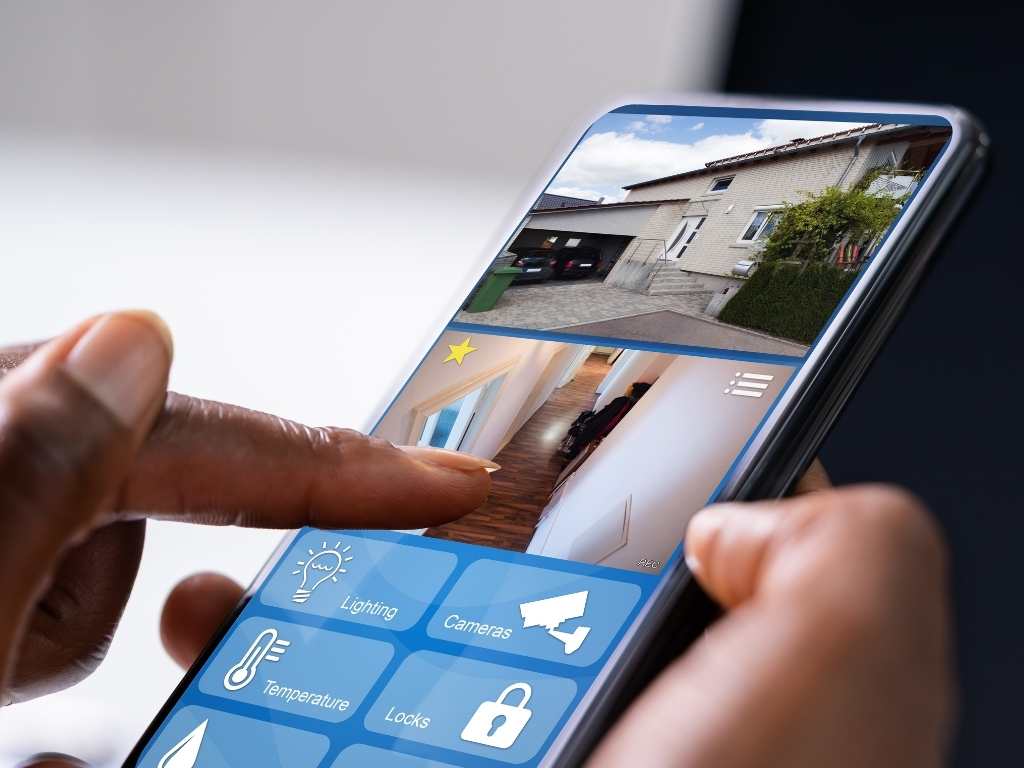
You need reliable CCTV to protect your property. A CCTV system with remote viewing lets you keep an eye on your business even when you’re away or working from home! You can log in from anywhere, see what’s happening in real-time, and immediately protect your business or home.

If you don’t have CCTV, YOU NEED HELP! 

Get the help you need, contact our team:

✉️ Sales@leaftechnologies.co.za | ☎️ 031 001 5323

www.leaftechnologies.co.za

What is Cloud storage, and why is it important? 

What is Cloud storage, and why is it important? 

Cloud Storage enables you to store your data on hosted servers in a separate location. This means you can store all your digital things like documents, photos, music and videos remotely, without taking up physical space in your home or office or using up megabytes on your computer.

Cloud storage is essential because even if your computer crashes or gets destroyed or stolen, your data remains safely stored in the “cloud” (another server in a different location). Thus, you can plugin and pick up where you left off without losing any information. 

For more help or further information on Cloud Storage – ask your Leaf Technologies team 

The IT Company that understands your business

✉️ Sales@leaftechnologies.co.za | ☎️ 031 100 5323 | https://leaftechnologies.co.za/contact-leaf-technologies/

[/et_pb_text][/et_pb_column][/et_pb_row][/et_pb_section]

What is Cloud storage, and why is it important? 

Cloud Storage enables you to store your data on hosted servers in a separate location. This means you can store all your digital things like documents, photos, music and videos remotely, without taking up physical space in your home or office or using up megabytes on your computer.

Cloud storage is essential because even if your computer crashes or gets destroyed or stolen, your data remains safely stored in the “cloud” (another server in a different location). Thus, you can plugin and pick up where you left off without losing any information. 

For more help or further information on Cloud Storage – ask your Leaf Technologies team 

The IT Company that understands your business

✉️ Sales@leaftechnologies.co.za | ☎️ 031 100 5323 | https://leaftechnologies.co.za/contact-leaf-technologies/